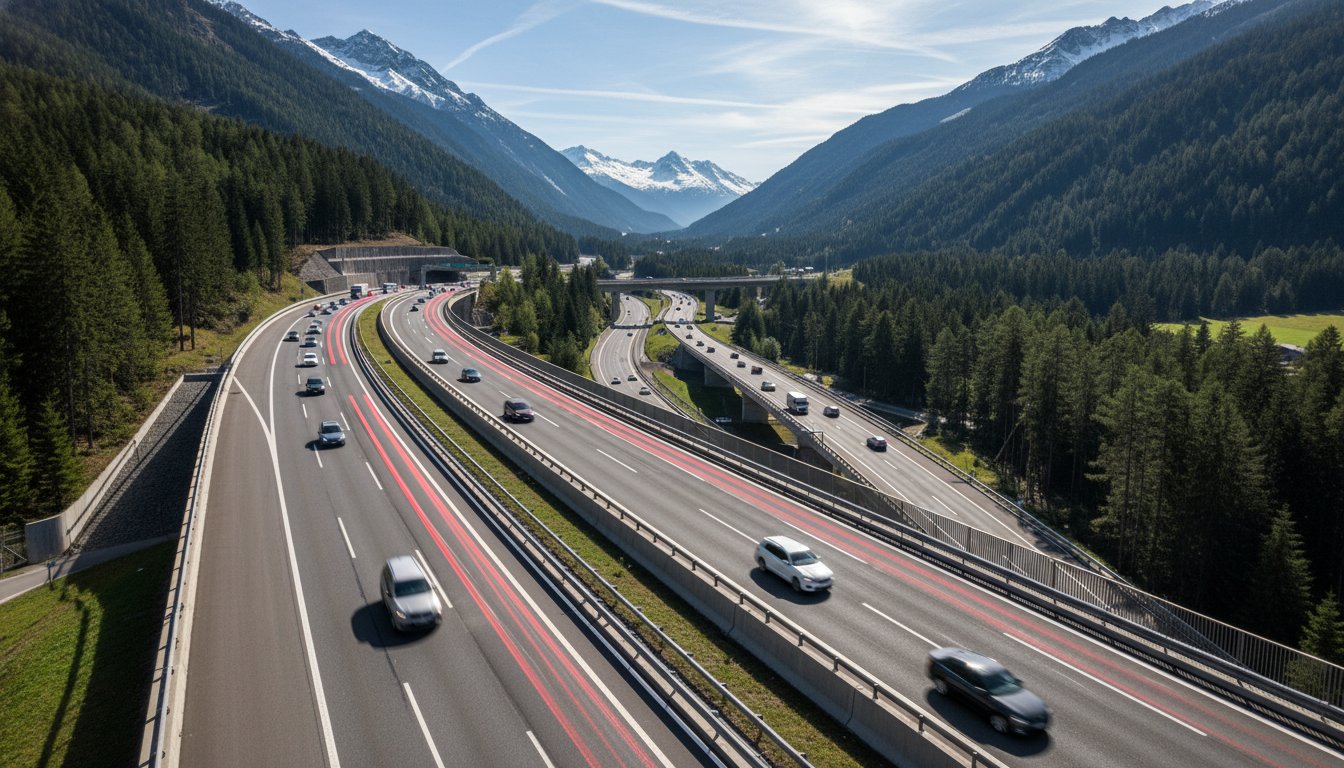
What if your long-awaited Alpine road trip begins not with a view of the mountains, but with a €120 fine at the border? Entering a new country should be a moment of excitement, yet the technicalities of the Austrian motorway toll for foreigners often cause significant anxiety for international drivers. It's a common concern; nobody wants their holiday budget impacted by a simple administrative oversight or a misunderstood rule. We understand that you want to focus on the scenery rather than the stress of legal compliance.
You can ensure a smooth journey on Austria's high-quality road network with complete confidence by securing your vignette requirements before you depart. The official ASFINAG Vignette Shop provides straightforward digital registration options, and this article will provide crucial clarity, including details about the specific 18-day waiting period that applies to certain long-term purchases. We'll also explore the total costs involved, identifying which major alpine tunnels require additional section tolls beyond the standard Austrian motorway toll for foreigners. By the end of this guide, you'll have a clear roadmap for legal compliance and a stress-free start to your journey.
Key Takeaways
- Learn the essential requirements of the Austrian motorway toll for foreigners to ensure your vehicle is legally compliant before you enter the high-speed road network.
- Select the appropriate validity period for your trip, such as the 10-day or 2-month options, while accounting for the 18-day activation delay required for digital registrations.
- Recognize which high-altitude routes require additional section tolls beyond the standard vignette to ensure your total travel costs are accurately calculated.
- Familiarize yourself with the mandatory safety equipment, including high-visibility vests and first aid kits, to meet Austrian road standards and avoid costly administrative fines.
- Prepare for the upcoming transition to a digital-only system by understanding how license plate-linked registrations provide a more efficient and secure alternative to traditional stickers.
Understanding the Austrian Motorway Toll System for Visitors
Austria's motorways are renowned for their efficiency and safety. This high standard is maintained through a user-funded system managed by ASFINAG, the national road infrastructure provider. Unlike many other nations, Austria doesn't use general tax subsidies to fund its primary transit network. Instead, it relies on the vignette system. This ensures that those who utilize the roads contribute directly to their upkeep and modernization. Understanding the Austrian motorway toll for foreigners is the first step toward a compliant and smooth journey across the country.
A standard Vignette (road tax) is mandatory for using the vast majority of the network. However, some high-cost alpine sections require an additional fee known as a section toll. You must ensure you have a valid registration before your tires touch an "A" or "S" road. This proactive approach prevents the stress of unexpected fines at the border or during transit. Managing the Austrian motorway toll for foreigners effectively allows you to focus on the spectacular views rather than administrative hurdles.
Which Vehicles Require a Vignette?
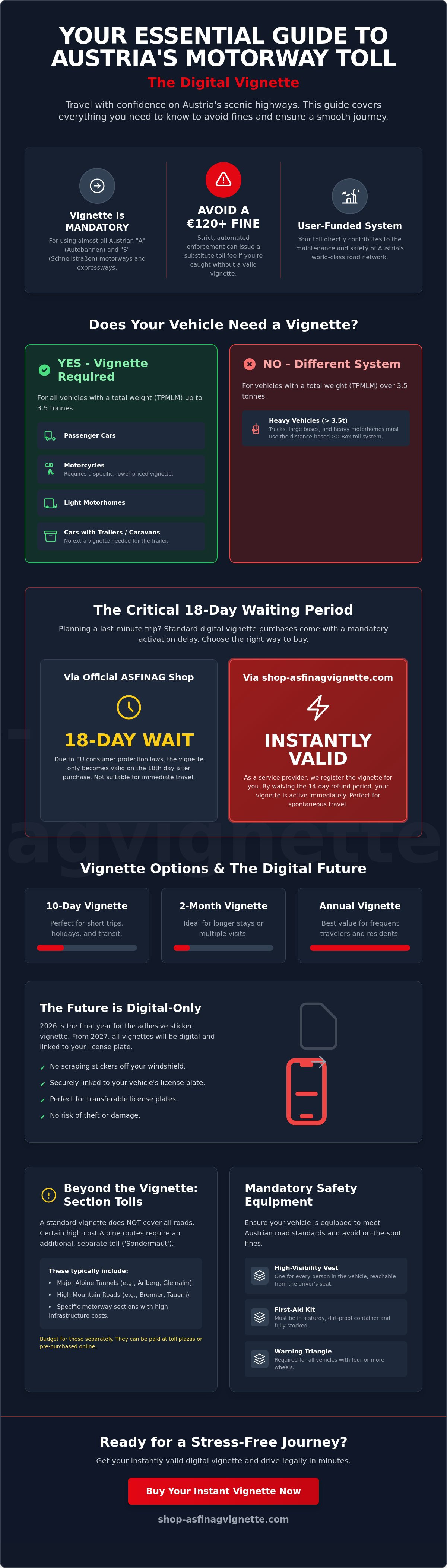
Compliance begins with identifying if your vehicle falls under the toll requirement. The system applies to all vehicles with a Technically Permissible Maximum Laden Mass (TPMLM) of up to 3.5 tonnes. This includes passenger cars, motorcycles, and light motorhomes.
- Cars and Light Motorhomes: Any vehicle in this category under the 3.5t limit must have a valid vignette.
- Motorcycles: These require a specific, lower-priced vignette.
- Trailers and Caravans: If your towing vehicle is under 3.5t, you don't need an additional vignette for the trailer. The registration of the car or motorhome covers the entire unit.
If your vehicle exceeds the 3.5t limit, you'll need to use the distance-based GO-Box system instead. Always check your vehicle registration documents to confirm your TPMLM before purchasing.
Identifying Toll Roads: Autobahns and Expressways
You can easily identify roads that require a toll by their signage. Look for prefixes "A" for Autobahns (motorways) and "S" for Schnellstraßen (expressways). These high-speed routes form the backbone of Austrian transit. The system covers the entire nationwide network of primary roads.
Accidental entry onto these roads without a vignette is a common mistake for visitors. Enforcement is strict and often automated via camera systems. Because of this, you should secure your digital registration before you start your engine. The toll requirement applies the moment you join the motorway, even if you're only traveling a short distance between exits. Pre-purchasing your toll access ensures you can navigate with peace of mind, knowing you are fully compliant with local regulations. If you're found without a valid registration, you face a substitute toll fee starting at €120.
Choosing Your Vignette: 2026 Validity Periods and Options
The year 2026 serves as a pivotal moment for international drivers. It is the final year you can legally use a physical adhesive sticker on your windshield. From 2027 onward, the entire network will move to a digital-only infrastructure. This transition allows travelers to modernize their approach to the Austrian motorway toll for foreigners by choosing a system that is tied to their license plate rather than a piece of plastic. This shift reflects a broader commitment to efficiency and user convenience across the Alpine road network.
Digital registrations offer significant security advantages that traditional stickers cannot provide. Because the toll status is stored in a central database, there's no risk of a physical sticker being stolen or damaged. If you use transferable license plates, a single digital registration remains valid for whichever car the plate is currently on. This flexibility is a major improvement over the old adhesive system, which required a separate sticker for every vehicle. It also eliminates the need to scrape old residue from your glass at the end of your trip.
The 10-Day Vignette: The Tourist Favorite
Short-term visitors typically find the 10-day option to be the most efficient choice. It provides a generous window for a standard holiday, covering both the arrival and departure days for most one-week trips. If your itinerary involves a two-week stay, you should determine if buying two 10-day vignettes is more cost-effective than a single 2-month version. You can find the current 10 day vignette Austria price to help with your budget planning. This specific duration remains the most popular choice for international tourists due to its balance of price and validity.
New for 2026: The 1-Day Digital Vignette
The 2026 season introduces the 1-day digital vignette. This option is tailored for transit travelers who are crossing Austria in a single day to reach destinations such as Italy or Slovenia. It is important to remember that this product is exclusively digital. You will not find a 1-day sticker at physical retail locations or gas stations. It provides immediate validity upon purchase, making it an excellent solution for spontaneous trips or unexpected route changes. This addition ensures that every traveler, regardless of their stay's length, has a compliant way to access the motorway network.
Selecting the correct validity period is essential for a worry-free trip. Before you set off on your journey, you can register your vehicle online to ensure you meet all legal requirements and avoid administrative penalties at the border.
The Digital Advantage: Avoiding the 18-Day Consumer Protection Wait
The transition to digital systems offers unparalleled convenience, but it requires a basic understanding of European consumer protection laws. For many travelers, the most confusing aspect of the Austrian motorway toll for foreigners is the mandatory waiting period for certain digital products. This regulation is designed to protect consumers by allowing a withdrawal period for online purchases. While this is a benefit in many retail contexts, it can create a significant hurdle for a driver who needs a 2-month or annual registration to be active immediately. Planning ahead is the most effective way to manage this requirement.
Purchasing your toll registration online before you start your trip is fundamentally safer than waiting until you reach the border. Border stations and petrol stations near the frontier are often crowded, especially during peak holiday seasons. By securing your digital vignette in advance, you eliminate the need for stressful stops and ensure your vehicle is compliant before you even cross the line. The key to a successful experience lies in choosing the right product for your timeline and selecting the correct start date during the checkout process. This proactive approach replaces travel anxiety with a sense of prepared confidence.
Planning Your Purchase Timing
The "18-day rule" is a critical factor for anyone seeking a 2-month or annual digital vignette. This period consists of a 14-day window for consumer withdrawal plus a 4-day buffer for potential mailing or processing delays. Consequently, these specific digital products only become valid on the 18th day after the purchase date. If you're planning a long-term stay, you must buy your registration at least three weeks before your departure. Always verify the activation date on your digital confirmation receipt before you join an "A" or "S" road to avoid unintended non-compliance.
Immediate Use for Short-Term Digital Products
Fortunately, the system is designed to accommodate spontaneous travel for shorter durations. The 1-day and 10-day digital vignettes are exempt from the 18-day waiting period. These products offer immediate validity upon purchase, which is ideal for transit travelers or those on a standard holiday. You can even complete the registration on your mobile device at a rest stop just before entering the toll network. This flexibility ensures that you can always find a way to meet the Austrian motorway toll for foreigners requirements, even if your trip was planned at the last minute. Understanding the Austria highway toll cost and its validity structures allows you to make the most efficient choice for your specific itinerary.
Section Tolls and Heavy Vehicles: Beyond the Standard Vignette
Austria's geography includes challenging alpine terrain. Maintaining the tunnels and passes that pierce these mountains requires significant financial resources. Because of these high operational costs, a standard vignette is not sufficient for six specific sections of the network. These routes, known as "Sondermautstrecken," require an additional payment regardless of whether you have a valid vignette. If you are planning an international journey through the Alps, understanding the Austrian motorway toll for foreigners means accounting for these extra fees before you arrive at the toll plaza.
The Digital Section Toll is a modern solution for these specific routes. It utilizes automatic license plate recognition to identify your vehicle as you approach the toll station. This technology allows you to use dedicated lanes, which typically bypass the manual payment booths and reduce transit time. Pre-paying for these sections online ensures a faster crossing and a more relaxed driving experience. You can buy your digital toll access in advance to streamline your mountain journey and avoid stopping for payment.
Navigating Alpine Tunnels and Passes
Foreigners often encounter section tolls on major transit routes connecting to Italy, Slovenia, and Switzerland. The following six sections require an additional fee for a single journey:
- A13 Brenner Motorway: €12.50
- A10 Tauern Motorway: €15.00
- S16 Arlberg Expressway: €13.00
- A11 Karawanken Motorway: €9.00
- A9 Pyhrn Motorway (Bosruck Tunnel): €7.00
- A9 Pyhrn Motorway (Gleinalm Tunnel): €12.00
Safety is paramount in these long structures. You must maintain the required distance from the vehicle in front and follow all overhead light signals. If you haven't pre-paid, you can use the manual lanes to pay with cash or credit card, but expect longer wait times during peak travel weekends.
The GO-Box for Large Motorhomes and Vans
Vehicle weight determines which toll system you must use. If your motorhome or van has a Technically Permissible Maximum Laden Mass (TPMLM) over 3.5 tonnes, you move from the "vignette world" into the "GO-toll world." These heavy vehicles utilize a mileage-based electronic system instead of a time-based vignette. This distinction is critical for owners of large recreational vehicles who might assume a standard vignette is sufficient.
You'll need to obtain a GO-Box device from a designated point of sale near the Austrian border before joining the motorway. This small electronic unit is mounted on your windshield and communicates with toll gantries located throughout the network. It tracks your distance traveled and deducts the appropriate fee from your balance. You can top up your GO-Box at numerous petrol stations across the country. Remember, a standard Austrian motorway toll for foreigners registration is invalid for vehicles in this weight class.
Driving in Austria: Safety Regulations and Compliance
Compliance with local regulations is the foundation of a secure journey. If you're found driving on the network without a valid Austrian motorway toll for foreigners, you will face an immediate substitute toll of at least €120. Failure to pay this on the spot can lead to administrative fines reaching up to €3,000. These penalties are strictly enforced through both manual checks and automated camera systems. Ensuring your registration is active before you join the motorway is the only way to guarantee a trouble-free experience.
Safety on the road extends beyond toll compliance. You are legally required to carry specific emergency equipment in your vehicle at all times. This includes a complete first aid kit, a warning triangle, and high-visibility vests for every passenger. Keep these vests within the cabin rather than the boot; you must be able to put them on before exiting the vehicle in an emergency. Between November 1 and April 15, you must also equip your car with winter tires if road conditions involve snow, slush, or ice. Carrying snow chains is highly recommended when traveling through high-altitude alpine passes during the colder months.
Emergency procedures in Austria are highly structured to protect all road users. If you encounter a breakdown, use the orange SOS telephones located at regular intervals along the motorway. These provide a direct link to the traffic control center and allow for precise location tracking. You must also understand the "Rettungsgasse" or emergency corridor. When traffic begins to congest, drivers in the far-left lane must move as far left as possible. Drivers in all other lanes must move to the right. This creates a clear path for emergency vehicles to reach accidents quickly and save lives.
Speed Limits and Traffic Signs
Adhering to speed limits is essential for both safety and legal compliance. The standard limit is 130 km/h on motorways and 100 km/h on open roads outside of built-up areas. Pay close attention to "IG-L" signs, which indicate environmental protection zones. Speed limits in these areas are strictly enforced to reduce emissions. Fines for exceeding IG-L limits are significantly higher than standard speeding tickets and can't be ignored. Familiarize yourself with the "End of all restrictions" sign, a white circle with grey diagonal lines, which indicates a return to standard speed limits.
Final Checklist Before Your Trip
Preparation is the key to a successful Alpine crossing. Use this checklist to ensure you're ready for the Austrian motorway toll for foreigners and general road safety:
- Verify that your digital vignette is registered to the correct license plate number.
- Confirm your vehicle's TPMLM is under 3.5 tonnes to ensure a vignette is the correct toll method.
- Check that high-visibility vests are accessible from the driver and passenger seats.
- Ensure your first aid kit is fully stocked and hasn't expired.
Prepare for a Seamless Alpine Journey
Navigating the high-speed transit network of Austria requires more than just a map; it requires the right preparation. By choosing a digital registration, you avoid the inconvenience of adhesive stickers and ensure your vehicle is recognized across the entire toll system. Remember that while 1-day and 10-day products offer immediate activation, long-term options for the Austrian motorway toll for foreigners require an 18-day lead time due to consumer protection laws. Verifying your vehicle's weight and carrying the mandatory safety equipment will complete your readiness for a compliant trip.
As an Official Digital Toll Partner, we provide a secure encrypted checkout to protect your information. You'll receive instant confirmation for 10-day vignettes, allowing you to move forward without delay. Secure your digital vignette for Austria online today to ensure every detail is handled before you reach the border. Austria's world-class infrastructure is ready for your arrival. We wish you a safe and enjoyable journey through the heart of the Alps.
Frequently Asked Questions
Do foreigners need a different type of vignette than Austrian residents?
No, the requirements for the Austrian motorway toll for foreigners are identical to those for residents. Every vehicle with a technically permissible maximum laden mass up to 3.5 tonnes must have a valid registration to use the "A" and "S" road network. Whether you are a local commuter or an international visitor, the prices and validity periods remain the same. This ensures a fair and transparent system for all road users.
Can I move my digital vignette to a different car if I change vehicles mid-trip?
No, a digital vignette is strictly bound to a specific license plate number. It cannot be transferred to another vehicle or a different plate once the registration is active. If you are using a rental car, the vehicle often already has a vignette; however, you should always verify this before starting your journey. If you switch to a different vehicle that lacks registration, you must purchase a new vignette for that specific license plate.
What happens if I enter a toll road by mistake without a vignette?
You must pay a substitute toll immediately if you are stopped by service and enforcement personnel. For cars, this fee is €120, while for motorcycles, it is €65. If you cannot pay this on the spot or if you are caught by an automated camera system, the case is referred to the local district authority. This can result in administrative fines ranging from €300 to €3,000 depending on the circumstances.
Is the digital vignette valid immediately after I buy it online?
Immediate validity depends on the type of product you purchase. The 1-day and 10-day digital vignettes are active the moment the transaction is complete. However, due to European consumer protection laws, the 2-month and annual digital vignettes only become valid on the 18th day after purchase. If you need a long-term registration to start sooner, you must plan your purchase at least three weeks in advance.
Do I need a separate vignette for my trailer or caravan?
No, you don't need an additional vignette for trailers or caravans if your towing vehicle is under 3.5 tonnes. The vignette registered to your car or light motorhome covers any attached trailer. This simplifies the process for holidaymakers traveling with extra equipment. Just ensure that the combined weight of the vehicle and trailer doesn't change the toll category of the towing vehicle itself.
Where can I check if my digital vignette is still valid?
You can verify your status through the public digital register by entering your license plate number and the country of registration. This tool provides an instant confirmation of your vehicle's current toll status and the expiration date of any active vignettes. It's a reliable way to gain peace of mind before you begin your journey. Always keep a digital or printed copy of your purchase confirmation as an extra precaution.
Are there any toll-free motorways in Austria for tourists?
Yes, there are specific exemptions on certain motorway sections, particularly near the national borders. These sections are sometimes designated as toll-free to manage local traffic flow or provide specific cross-border access. However, these exemptions are limited and subject to change. You should always assume a vignette is required unless you see specific signage indicating otherwise, and verify the current status before your journey.
What is the fine for not having a vignette in 2026?
The standard substitute toll for a missing or invalid registration in 2026 is €120 for cars. If the system detects a digital error, such as a mistyped license plate during entry, the fine can be €200. These fees are designed to encourage compliance and fund road maintenance. Avoiding these costs is simple; ensure you have a valid Austrian motorway toll for foreigners registered before you enter the motorway network.